Tag: design

  • Intrusive, needy software

    With the ubiquity of Internet connections and cheap storage and data costs, software applications have become intrusive, almost needy in how they interact with users.

    So the problem isn’t that software ever teaches, asks, or informs. The problem is that once a company builds the machinery to do it, that machinery becomes cheap to reuse, and the incentives gradually pull it away from “help the user succeed” toward “move the metric.”

    What starts as an occasional heads-up becomes a permanent layer of UI exhaust. What starts as support becomes a funnel. What starts as a reminder becomes a habit-forming system.

  • The Moylan Arrow

    That little arrow on your dashboard that points either left or right, tells you which side of your gas tank is on. It’s such a simple design, and it even has a name, The Moylan Arrow, named after the engineer, Jim Moylan.

    “I would like to propose a small addition,” he wrote, “in all passenger car and truck lines.” 

    The proposal he had in mind was a symbol on the dashboard that would tell drivers which side of the car the gas tank was on.   

    “Based on personal experience,” he wrote, “I feel that this little indicator would remove the guesswork of which side I want to park.” He continued: “For the minor investment involved on the company’s part, I think it would be a worthwhile convenience.” 

    Very soon, everything became a standard design feature in nearly every car

  • Powerline giants

    A really cool design proposal that would have built, powerline transmission towers as human looking giants.

  • The S Thing clock

    There’s a very good chance you learned how to draw the diamond S in your younger days. Someone turned it into a clock.

  • 30 days of ties

    Through the month of September, I designed a tie a day. A day early, below are the results. Click to enlarge and check out some of the details. I prefer minimalist designs, solid colors and a contemporary look. Some designs could have any sort of color variation, so I only did a few and then moved to a different concept. Day 1 is in the top left, then Day 2 through 6 in the top row, etc.

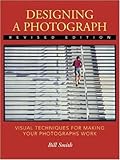
  • Designing a Photograph – Bill Smith

    Designing a Photograph: Visual Techniques for Making Your Photographs Work by Bill Smith takes a designer’s view of to a photograph. Visually, what makes something interesting or engaging, and apply it to a photograph. Smith makes the argument of knowing how to pay attention to groups of visuals. These visuals include:

    • Figure ground
    • selective focus
    • similar color
    • closure
    • continuation
    • similar size and shape
    • similar texture
    • object proximity

    The book includes exercises for the reader to perform (shoot in bursts, look at a subject a variety of different ways). Later in the book, Smith details when black and white works better or if color is optimal. Consider contrast and tones and how light affects both.

    Images do have f stop and lens information for those curious of technical details.

    Designing feels dated, even for 2001, retaining sample images taken with Kodachrome. Kodachrome is dead, and even in 2001 was gasping its final breaths. Ignoring that, applying a designer’s eye to photography can help tremendously with composition and achieving the desired impact.

  • 100 days – a design challenge

    Michael Bierut has challenged students at Yale to perform a “design operation” for 100 days.   

    The only restrictions on the operation you choose is that it must be repeated in some form every day, and that every iteration must be documented for eventual presentation. The medium is open, as is the final form of the presentation on the 100th day.

    An additional challenge I see, beyond solving the design problem of the day is having the perseverance, especially through the traditional Hanukkah, Christmas, New Years’ holidays. Being creative and getting something done are two separate things. Doing both, together, for 100 days is a feat. And these exercises are more than a picture a day or a self portrait a day. They have purpose, utility or function.